PULL UPS FOR BEGINNERS
Saturday, 24 May 2014

PULL-UP
What is a pull-up?
Pull ups are a unique excercise which recruit 13 different muscles which makes it a difficult movement yet offers the most reward for any single movement. Being able to perform multiple pull ups is a true gauge of ones strength and only possible if your power to weight ratio is within a healthy range. We encourage you to take the 20 pull ups challenge and witness your capabilities when strictly following the program.
Primary Muscle:
Latissimus Dorsi (Lats)
Secondary Muscles:
Brachialis (Lower Biceps)
Brachioradialis (Forearm)
Biceps Brachii (Biceps)
Teres Major (Outer Back)
Deltoid, Posterior (Rear Delts)
Infraspinatus (Rotary Cuff)
Teres Minor (Rotary Cuff)
Rhomboids (Middle Back)
Levator Scapulae (Rear Neck)
Trapezius, Middle (Upper Traps)
Trapezius, Lower (Lower Traps)
Pectoralis Minor (Chest)
Stabilizer Muscles:
Triceps
Pull ups vs. Chin ups. its all in the grip.
Pull ups are performed with your palms facing away from you. Chin
ups are performed with your palms facing inward toward you. Chin ups
require more from your biceps and pecs. The pull up demands more from
your lower Latissimus Dorsi (Lats). Chin ups are easier to perform as
they offer more arm leverage and bicep influence. Once you have
exhausted your max pull up reps Supinate your grip and try some chin ups
you will see employing a diffent group of muscles allows you to
continue your workout.
Beginners’ Tips:
Negative pull up:
Climb up to the bar so you start in the topmost position, then
slowly lower yourself. Work against the gravity and try to lower
yourself as slow as you can.
Jumping pull up:
Stand on a stable appropriate height plyometric box or bumper
plates which allow you to reach the pull up bar while standing with your
arms stretched upward. Simply jump up to create momentum and use your
muscles to carry you the rest of the way upward.
Static holds:
Static holds are the absolute most entry level way to safely start
building strength to do your first pull up. Simply just hang from the
pull up bar with your arms extended or with your arms flexed with your
chin at the bar.
Assisted pull up:
Rubber assist bands are a great tool to get you on your way to doing pull ups.
Rope rows:
Hang a rope or strap from your pull up bar and with your feet on
the ground and out in front of you row your way upward to build the
strength for your first pull up.
PUSH-UP
A push-up is a common calisthenics exercise performed in a prone position by raising and lowering the body using the arms. Push-ups exercise the pectoral muscles, triceps, and anterior deltoids, with ancillary benefits to the rest of the deltoids, serratus anterior, coracobrachialis and the midsection as a whole. Push-uphttps://www.blogger.com/blogger.g?blogID=5592940417148532098#editor/target=post;postID=4972629616034485178s are a basic exercise used in civilian athletic training or physical education and commonly in military physical training. They are also a common form of punishment used in the military, school sport, or in some martial arts dojos.
While the push-up primarily targets the muscles of the chest, arms, and shoulders, support required from other muscles results in a wider range of muscles integrated into the exercise
Variations
Planche push-ups
An extremely difficult variation is to perform a push-up using only hands, without resting the feet on the floor, i.e. starting from and returning to the planche position. These are known as "planche push-ups". To do this variation, the body's center of gravity must be kept over the hands while performing the push-up by leaning forward while the legs are elevated in the air, which requires great strength and a high level of balance. The entire bodyweight is lifted in this variation.Knuckle push-ups
Another variation is to perform pushups on the knuckles of the fist, rather than with palms of the hands on the floor. This method is also commonly used in martial arts, such as Karate and Tae Kwon Do, and may be used in boxing training while wearing boxing gloves.The intent, in addition to building strength and conditioning, is to toughen the knuckles, wrist, and forearm in the punching position. This variation also reduces the amount of strain in the wrist, compared to the typical "palms on floor" approach, and so it is sometimes used by those with wrist injuries. Such practitioners will usually perform their knuckle pushups on a padded floor or a rolled-up towel, unlike martial artists, who may do bare-knuckle pushups on hard floors.
Maltese push-ups
"Maltese push-ups" are a gymnastic variation of the push-up, in which the hands are positioned closer to the hips (as opposed to the pectorals), but with an extremely great distance between them.Hindu push-ups
See also: Surya Namaskara
"Hindu push-ups" (aka Hanuman Push-ups, Judo
Push-ups or Dive Bomber Push-ups, although the latter vary slightly in
the second half of the movement) are a form of exercise prevalent in Indian and Pakistani physical culture and Indian martial arts, particularly Pehlwani.To execute a Hindu Push-up, one starts with feet and hands little more than shoulder width apart, forming the body into an upside down "V" and keeping the head, neck, and spine aligned. The arms are touching the ears in this position. From this starting position, commonly called Downward Dog in Yoga, one bends the elbows, lowering the head towards the ground and bringing the chest almost to the ground, while his hips are still about a couple of feet in the air then "swoops" forward to a "Cobra Pose", which means that the head and shoulders are high with unbent elbows but the knees and hips are almost touching the ground. To this point, Hindu Push-ups and Dive Bomber Push-ups are the same. To return to the Downward Dog position in a Hindu Push-up, from the Cobra Pose, raise the abdomen into a normal plank position, then push your hips up and head backwards into Downward Dog. Thus we see that in a Hindu push-up, the head and hips go in circles rather than up and down. In a Dive Bomber Push-up, from the Cobra Pose, bend the elbows again and reverse the execution back into Downward Dog. In a Downward Dog, you should be seeing your knees.
The simple set of exercises of dand-baithak (push-up and squats) practiced in the villages of India has a beneficial effect on the spine. It takes off the strain from the spine and makes it fit to fight the other strains on the spine caused by the adoption of an erect posture.
The American College of Sports Medicine (2000) recommends using a push-up test to examine endurance on the upper-body musculature. For a male subject, assuming a dand position, with back straight, head up, and hands placed shoulder width apart, lowering his body with his chin touching the mat; the abdomen should not touch the mat.
Hindu squats are called Uthak-bethak and the exercise regimen in Indian wrestling often consists of doing the Indian "jack-knifing push-ups", Indian club swinging and squats. The Hindu jack-knifing push-ups are part of the core exercises for building up of strength, stamina, and flexibility of joints. The dand was also a part of the exercise regimen of Bruce Lee. They are commonly called swallowdives in English speaking countries.
Guillotine push-up
The guillotine push-up is a form of push-up exercise done from an elevated position (either hands on elevated platforms or traditionally medicine balls) where in the practitioner lowers his chest, head, and neck (thus the name) past the plane of the hands. The goal is to stretch the shoulders and put extra emphasis on the muscles there.Backhanded push-up
The backhanded push-up is a form of push-ups performed using the back of the hands, rather than the palms. Currently the record holder of the backhanded push-ups is Bill Kathan who broke the world record in 2010, by performing 2,396 on Valentine's Day.One arm versions

Other versions
There are some less difficult versions, which reduce the effort by supporting some of the body weight in some way. One can move on to the standard push-up after progress is made."Wall" push-ups are performed by standing close to a wall and pushing away from the wall with the arms; one can increase the difficulty by moving one's feet farther from the wall.
"Table" or "chair" push-ups are performed by pushing away from a table, chair, or other object. The lower the object, the more difficult the push-up. One should be sure that the object is securely stationary before attempting to push up from it.
"Modified" or "knee" push-ups are performed by supporting the lower body on the knees instead of the toes, which reduces the difficulty. This is useful for warm ups/downs, pyramids/drop sets, endurance training and rehab. It can also be used to train in a more explosive plyometric manner (like clapping pushups) when one can't perform them with the feet. It can also be used with the 1-arm variations as a transition.
"Three phase" push-ups involve simply breaking a standard push up into three components and doing each one slowly and deliberately. Participants usually start face down on the floor with hands outstretched either perpendicular or parallel to the body. The first phase involves the arms being brought palms down on a 90 degree angle at the elbows. The second phase involves the body being pushed into the up position. The third phase is returning to the starting position. This technique is commonly used after a large block of regular push ups, as it poses less stress and requires less effort.
"Diamond" or "Triceps" push-ups are done by placing both palms on the ground and touching together both thumbs and pointer fingers. This technique requires stronger triceps muscles than regular push-ups due to the fact that, at the bottom of the stroke, the forearm is nearly parallel to the ground and the elbow is almost completely flexed, resulting in much higher mechanical load on the triceps.
Plyometrics
Two platforms are placed beside the trainee, one on either side. The exercise begins with the hands on either platform supporting the body, then the subject drops to the ground and explosively rebounds with a push-up, extending the torso and arms completely off the ground and returning the hands to the platforms.Another is simply an explosive push-up where a person attempts to push quickly and with enough force to raise his or her hands several centimeters off the ground, with the body completely suspended on the feet for a moment, a variation of the drop push. This is necessary for performing 'clap push ups' - i.e. clapping the hands while in the air.
With push-ups, many possibilities for customization and increased intensity are possible. Some examples are: One hand can be set on a higher platform than the other or be farther away from the other to give more weight to the opposite arm/side of the body and also exercise many diverse muscles. One can perform push-ups by using only the tips of the fingers and thumb. For increased difficulty, push-ups can be performed on one arm or using weights.
Push-ups between chairs form an integral part of the "Dynamic Tension" Course devised by Charles Atlas, and similar systems.
Non-training

In a competitive or disciplinary context especially, it is not rare to use "nastier" variations, e.g., in mud, gravel, snow or dirt, hot ground, divested, and/or to make it physically harder, as by putting one's foot or a weight on the performer's back (possibly with sanctions if equilibrium is lost, such as spilling a glass) or to do the exercise resting on the knuckles or not use all fingers (not counting the thumb).
Record breakers and attempts
The first record for push-ups was documented by Guinness World Records: 6,006 non-stop push-ups by Charles Linster in 1965, October 5.The record for the most push-ups non-stop was 10,507, set by Minoru Yoshida of Japan in October 1980. Minoru Yoshida's World Record was the last of its category for non-stop push-ups to be published by Guinness World Records. A new category, "Most Push-ups in 24 Hours," has since been introduced.
The current world record for most push-ups in 24 hours is by Charles Servizio (USA) who achieved 46,001 push-ups in just 21 hours, 6 minutes on 1993, April 24 to 25.
The world record for most two-handed backhand push-ups in one hour is 1,940 by Aman Sharma of the UK, set in 2007.
Doug Pruden (Canada) performed 1,025 one-arm push-ups on the back of the hand on 8 November 2008.
The Guinness World Record holder for backhanded push-ups, American John Morrow, completed 123 in one minute in 2006
Thursday, 22 May 2014
How to Start Jogging
1. Find a pair of shoes that are comfortable and provide adequate support.
If necessary, visit a store that specializes in running equipment for
advice. Any store that carries proper running shoes will also carry
proper running attire. Running shorts are not necessary and can be a tad
uncomfortable for someone who is not used to shorts that are so short,
but if you are willing to buy a couple pairs, you will so find the added
freedom a must.
2.Set your goals. Figure out what level of commitment
that you are comfortable with and what amount of time and energy you
want to commit to running. No matter what your goal is, since you are
not used to running, you need to start small, slow, and build up.
3. Decide whether you want to run outdoors or indoors on a treadmill.
4.
Stretch
before and after you run to decrease odds of injury. When stretching
make sure to stretch the important muscle groups in running - arms,
calves, hamstrings, quads and glutes.
5. Take a friend with you. Find a friend who also wants to get in shape, and start jogging together.
6. Run every day. This is
crucial to building up the habit. If you feel the need for a day off,
take off Sunday, or every other Sunday, making it the last day of your
training week. If you start feeling tired from day to day, shorten one
of your runs or take a run at a slower pace. You'll feel better the next
day, better than if you'd taken the day off. Also, keep your mileage
recorded, either on paper or on line.
7. Enjoy what you've started.
You are developing a life style that is rewarding both physically and
emotionally. You have the opportunity to make new friends and to be
proud of the shape your body is in.
read more at: www.wikihow.com/Start-Jogging
read more at: www.wikihow.com/Start-Jogging
JOGGING
Jogging is running at a gentle pace.The definition of jogging as compared with running is not standard. One definition describes jogging as running slower than 6 miles per hour (10 km/h).
Jogging is also distinguished from running by having a wider lateral spacing of foot strikes, creating side-to-side movement that likely adds stability at slower speeds or when coordination is lacking. (Wikipedia)
Benefits

The National Cancer Institute has performed studies that suggest jogging and other types of aerobic exercise can reduce the risk of lung, colon, breast and prostate cancers, among others. It is suggested by the American Cancer Society that jogging for at least 30 minutes five days a week can help in cancer prevention.
While jogging on a treadmill will provide health benefits such as cancer prevention, and aid in weight loss, a study published in BMC Public Health reports that jogging outdoors can have the additional benefits of increased energy and concentration. Jogging outdoors is a better way to improve energy levels and advance mood than using a treadmill at the gym.
Jogging also prevents muscle and bone damage that often occurs with age, improves heart performance and blood circulation and assists in preserving a balanced weight gain.
How
Physical Activity Impacts Health
Regular
physical activity that is performed on most days of the week reduces the
risk of developing or dying from some of the leading causes of illness
and death in the United States.
•
Reduces
the risk of dying prematurely.
• Reduces the risk of dying prematurely from heart disease.
• Reduces the risk of developing diabetes.
• Reduces the risk of developing high blood pressure.
• Helps reduce blood pressure in people who already have high blood pressure.
• Reduces the risk of developing colon cancer.
• Reduces feelings of depression and anxiety.
• Helps control weight.
• Helps build and maintain healthy bones, muscles, and joints.
• Helps older adults become stronger and better able to move about without falling.
• Promotes psychological well-being.
• Reduces the risk of dying prematurely from heart disease.
• Reduces the risk of developing diabetes.
• Reduces the risk of developing high blood pressure.
• Helps reduce blood pressure in people who already have high blood pressure.
• Reduces the risk of developing colon cancer.
• Reduces feelings of depression and anxiety.
• Helps control weight.
• Helps build and maintain healthy bones, muscles, and joints.
• Helps older adults become stronger and better able to move about without falling.
• Promotes psychological well-being.
Specific
Health Benefits of Exercise
Heart
Disease and Stroke. Daily physical activity can help prevent heart
disease and stroke by strengthening your heart muscle, lowering your blood
pressure, raising your high-density lipoprotein (HDL) levels (good cholesterol)
and lowering low-density lipoprotein (LDL) levels (bad cholesterol), improving
blood flow, and increasing your heart's working capacity.
High
Blood Pressure. Regular physical activity can reduce blood pressure
in those with high blood pressure levels. Physical activity also reduces
body fatness, which is associated with high blood pressure.
Noninsulin-Dependent
Diabetes. By reducing body fatness, physical activity can help to
prevent and control this type of diabetes.
Obesity.
Physical activity helps to reduce body fat by building or preserving muscle
mass and improving the body's ability to use calories. When physical activity
is combined with proper nutrition, it can help control weight and prevent
obesity, a major risk factor for many diseases.
Back
Pain. By increasing muscle strength and endurance and improving flexibility
and posture, regular exercise helps to prevent back pain.
Osteoporosis.
Regular weight-bearing exercise promotes bone formation and may prevent
many forms of bone loss associated with aging.
Psychological
Effects. Regular physical activity can improve your mood and the way
you feel about yourself. Researchers also have found that exercise is
likely to reduce depression and anxiety and help you to better manage
stress.
read more at: http://www.nutristrategy.com/health.htm
Monday, 19 May 2014
It is hotly debated whether or not stretching helps prevent injury, the other benefits of stretching
are numerous and factual. Heavily utilized in pilates and yoga,
stretching is widely supported today as a vital part of fitness. With
the ability to reduce stress, ease lower back pain, increase flexibility
and more, stretching should become a part of everyone's exercise
routine.
1. Increased Circulation
While it is widely debated whether or not
stretching prevents injury, it has been proven to increase circulation.
Although stretching does not necessarily directly prevent injury from
overuse, it does increase the blood flow and supply of nutrients to
muscles and cartilage. This reduces muscle soreness after working out.
The less sore your muscles are, the less painful it will be to work the
same muscles and to exercise in general, and the more comfortable your
day-to-day life will be.
2. Flexibility
There are four main measures of overall fitness: aerobic, muscular, body composition and flexibility. The main way to increase your flexibility is by stretching.
As you age, your muscles gradually become
shorter and tighter, reducing your overall flexibility. This restriction
makes you more susceptible to muscle, tendon and joint injuries.
Stretching is primarily responsible for increasing flexibility, and
reduces these risks. Increased flexibility also allows you to exercise
more easily.
3. Increased Range of Motion
Stretching has been shown to effectively increase range of motion in joints. Better range of motion enables you to keep better balance. Better balance means you are less susceptible to falls and the resulting injuries (of particular importance as you age). Increased range of motion also helps to keep you up and moving.4. Reduce Stress
Everyone has stress. Everyone is constantly looking for new methods of relief. Like all types of exercise, flexibility exercises like stretching have powerful stress-busting abilities. Stress causes your muscles to contract, becoming tense. This tension can have negative effects on just about every part of your body. Gentle stretching exercises relax tense muscles associated with stress. Also, since stretching is an exercise, it has the same endorphin-boosting effects, improving your mood and the way you feel in general.5. Alleviate Lower Back Pain
Millions of people struggle with chronic
lower back pain. Stretching is an excellent way to strengthen the lower
back muscles, alleviating soreness and pain. Since many muscles (quadriceps,
hamstrings, lower back muscles and hip flexors) contribute to your
posture, stretching these muscles has the ability to greatly reduce or
eliminate lower back pain.
The truth of whether or not stretching prevents injury can change from one day to the next, depending on
what expert you're consulting. However, the fact still remains that
stretching has numerous benefits outside of preventing injury. You can
live a more comfortable daily life,
increase your flexibility and alleviate stress and pain just by doing a
few stretches before, after or separate from your workout.
The Benefits of Stretching
According to the Mayo Clinic, the top five benefits of stretching include:- Increased flexibility and joint range of motion:
Flexible muscles can improve your daily performance. Tasks such as lifting packages, bending to tie your shoes or hurrying to catch a bus become easier and less tiring. Flexibility tends to diminish as you get older, but you can regain and maintain it. - Improved circulation:
Stretching increases blood flow to your muscles. Blood flowing to your muscles brings nourishment and gets rid of waste byproducts in the muscle tissue. Improved circulation can help shorten your recovery time if you've had any muscle injuries. - Better posture:
Frequent stretching can help keep your muscles from getting tight, allowing you to maintain proper posture. Good posture can minimize discomfort and keep aches and pains at a minimum. - Stress relief:
Stretching relaxes tight, tense muscles that often accompany stress. - Enhanced coordination:
Maintaining the full range-of-motion through your joints keeps you in better balance. Coordination and balance will help keep you mobile and less prone to injury from falls, especially as you get older.
Proper Stretching Technique
It is essential to practice proper stretching techniques. Doing so will allow you to avoid any unnecessary injury. Tips to proper stretching technique include the following:- Warm up first
Stretching muscles when they're cold increases your risk of pulled muscles. Warm up by walking while gently pumping your arms, or do a favorite exercise at low intensity for five minutes. - Hold each stretch for at least 30 seconds It takes time to lengthen tissues safely. Hold your stretches for at least 30 seconds — and up to 60 seconds for a really tight muscle or problem area. That can seem like a long time, so wear a watch or keep an eye on the clock to make sure you're holding your stretches long enough. For most of your muscle groups, if you hold the stretches for at least 30 seconds, you'll need to do each stretch only once.
- Don't bounce
Bouncing as you stretch can cause small tears (microtears) in the muscle, which leave scar tissue as the muscle heals. The scar tissue tightens the muscle even further, making you even less flexible — and more prone to pain. - Focus on a pain-free stretch
If you feel pain as you stretch, you've gone too far. Back off to the point where you don't feel any pain, then hold the stretch. - Relax and breathe freely
- Don't hold your breath while you're stretching
- Stretch both sides
Make sure your joint range of motion is as equal as possible on each side of your body - Stretch before and after activity
Light stretching after your warm-up followed by a more thorough stretching regimen after your workout is your best bet
- Low Back Stretches
Three quick and easy exercises to stretch the lower muscles of your back. - Morning Stretches
Stretching in the morning is a great way to "waken" up your muscles, and get them ready for the day. - Self Assisted Neck Stretches
Stretches can be done with self assistance to obtain a more efficient stretch. Here you can learn how to perform self assisted stretches of the neck.
-
Acute Muscle Strains
People who have suffered an acute muscle strain should avoid placing further stress on the muscle through stretching activities. The injured muscle should be given time to rest. Stretching muscle fibers in the acute period can result in further injury. - Fractured Bones
After breaking a bone, the fracture site needs time to heal. Stretching muscles that surround this injured area can place stress on the bone and prevent it from healing as well as further displace the break. Stretching a joint that surrounds a broken bone should never be done until cleared by your physician. - Joint Sprains
When you sprain your joint, you overstretch the ligaments that help stabilize the bones that form the joint. For this reason stretching early after a joint sprain should be avoided. As with fractures, these structures need time to heal and stretching too early in the injury will delay this process.
American Journal of Sports Medicine, 1999, Vol. 27, No. 2, pp. 173-176
American Family Physician
Exercise: How to Get Started
Wednesday, 23 April 2014
HEALTHY BODY
The past weeks we have been looking at keeping the mind active and it's advantages.
This week i will be looking at the advantages of having a healthy body. Today i am gonna post a short list on the advantages of a healthy body. you can all chip in and add some more advantages, it would be greatly appreciated.
The Benefits of Healthy
Body Composition
The association of altered body composition with
chronic health conditions is so strong that in 1995
the National Institutes of Health convened an Expert
Panel to encourage programs for improving body
composition.
By reducing body fat, a healthy body composition may:
Improve insulin sensitivity and glucose tolerance
Improve blood circulation in all parts of the body,
thereby reducing the risk of heart disease and
stroke
Promote healthy blood pressure and cholesterol
levels
Reduce respiratory infections and breathlessness,
and improve lung function
Improve quality of sleep
Relieve some of the strain placed on your knees,
hips, and lower back—which can reduce pain
Increase energy and endurance
Reduce the risk of certain pregnancy
complications
Improve mood and self-confidence
Plain and simple...
A healthy body
composition can improve the overall
quality of your life!
Sunday, 13 April 2014
Tips for a Smarter You …
- Sleep
Sleep is not only essential for regenerating your physical body, but it is imperative for reaching new mental insights and being able to see new creative solutions to old problems. Sleep removes the blinders and helps "reset" your brain to look at problems from a different perspective, which is crucial to creativity.
Research from Harvard indicates that people are 33 percent more likely to infer connections among distantly related ideas after sleeping, but few realize that their performance has actually improved. Sleep is also known to enhance your memories and help you "practice" and improve your performance of challenging skills. In fact, a single night of sleeping only four to six hours can impact your ability to think clearly the next day.
The process of growth, known as plasticity, is believed to underlie the brain's capacity to control behavior, including learning and memory. Plasticity occurs when neurons are stimulated by events, or information, from the environment. However, sleep and sleep loss modify the expression of several genes and gene products that may be important for synaptic plasticity. Furthermore, certain forms of long-term potentiation, a neural process associated with the laying down of learning and memory, can be elicited in sleep, suggesting synaptic connections are strengthened while you slumber.
As you might suspect, this holds true for infants too, and research shows that naps can give a boost to babies' brainpower. Specifically, infants who slept in between learning and testing sessions had a better ability to recognize patterns in new information, which signals an important change in memory that plays an essential role in cognitive development.vi Even among adults, a mid-day nap was found to dramatically boost and restore brainpower.
2. Vitamin D
Activated vitamin D receptors increase nerve growth in your brain, and researchers have also located metabolic pathways for vitamin D in the hippocampus and cerebellum of the brain, areas that are involved in planning, processing of information, and the formation of new memories.
The National Institutes of Mental Health recently concluded that it is vital that the mother get enough vitamin D while pregnant in order for the baby's brain to develop properly. The child must also get enough vitamin D after birth for "normal" brain functioning. In older adults, too, research has shown that low vitamin D levels are associated with poorer brain function, and increasing levels may help keep older adults mentally fit.viii
Appropriate sun exposure would take care of these issues, as the sun is irreplaceable when it comes to the body's ability to produce adequate amounts of vitamin D.
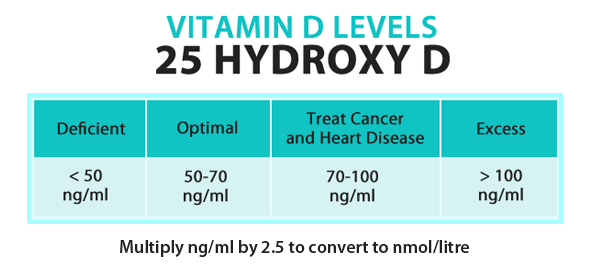
Appropriate sun exposure is all it takes to keep your levels where they need to be for healthy brain function. If this is not an option, a safe tanning bed is the next best alternative, followed by a vitamin D3 supplement. It now appears as though most adults need about 8,000 IU's of vitamin D a day in order to get their serum levels above 40 ng/ml, which is the lowest they should be. Ideally, your serum levels should be between 50-70 ng/ml, and up to 100 ng/ml to treat cancer and heart disease. However, it's important to realize that there's no magic dosage when it comes to vitamin D. What's important is your serum level, so you need to get your vitamin D levels tested to make sure you're staying within the optimal and therapeutic ranges as indicated below.
 3. Challenge Your MindOne of the simplest methods to boost your brain function is to keep on learning. The size and structure of neurons and the connections between them actually change as you learn. This can take on many forms above and beyond book learning to include activities like traveling, learning to play a musical instrument or speak a foreign language, or participating in social and community activities.
Another important method? Brain aerobics. As with learning, challenging your brain with mind-training exercises can keep your brain fit as you age. This can be something as simple as thinking of famous people whose first names begin with the letter A, doing crossword puzzles or playing board games that get you thinking. Research has even shown that surfing the Web activates regions in your brain related to decision-making and complex reasoning.xiii So unlike passively watching TV, using the Internet is an engaging task that may actually help to improve your brainpower.
for more information on this you can read further at this website good-brain-health-tips
Monday, 24 March 2014
Does Exercise Lead To A Better Brain
I always come accross health articles and shows that talk about exercise helping improve your brain function and activity level of the mind.
i would like to find out your opinions on this matter. I have posted a link to an article i have just read, maybe it can help everyone understand this issue better and maybe even convince you once and for all.

Monday, 10 March 2014

Thursday, 6 March 2014
Water
WATER

Water is one of the most important fluids for humans
and all other animals. It not only plays an important role in our survival, it
also helps the brain function and the body stay healthy.
Water just like everything else has its advantages
and disadvantages, and should be consumed in a moderate manner. Too much of it
can be bad for your body. I am going to write on some of the benefits and
disadvantages of water and how much water should we consume.
How much should you drink every day?
How much
water should you drink each day? It's a simple question with no easy answers.
Studies have produced varying recommendations over the years, but in truth,
your water needs depend on many factors, including your health, how active you
are and where you live.
Although
no single formula fits everyone, knowing more about your body's need for fluids
will help you estimate how much water to drink each day.
BENEFITS
Water is
your body's principal chemical component and makes up about 60 percent of your
body weight. Every system in your body depends on water. For example, water
flushes toxins out of vital organs, carries nutrients to your cells and
provides a moist environment for ear, nose and throat tissues.
Lack of water can lead to dehydration, a condition that occurs when you
don't have enough water in your body to carry out normal functions. Even mild
dehydration can drain your energy and make you tired.
1) Drinking Water Keeps You Young
Drinking
plenty of water is great for your skin. If you don't drink enough water, you'll
suffer from dry skin, and you'll be likely to use more creams and lotions to
moisturize. However, creams and lotions don't strike at the root of the
problem. Drinking plenty of water keeps your skin moisturized and reduces the
appearance of fine lines and wrinkles.
If you
don't drink enough water, your body will try to retain it in order to conserve
resources. This retention makes your skin puffy and can even lead to bloating.
2) Drinking Water Helps You Lose Weight
There's a
reason why most diets and fitness programs ask you to drink a lot of water. One
of the benefits of drinking water is that it helps you lose weight.
Water
suppresses your appetite, so you don't eat as much. Drinking plenty of water
also prevents fluid retention, because your body won't try to retain water if
it's getting enough.
Drinking
water also helps your body burn stored fat. If you're not drinking enough
water, your liver will be forced to help your kidneys detoxify your body. When
you drink plenty of water, your kidneys don't need any extra help, so your
liver will be able to metabolize stored fat more efficiently. Drinking water
flushes toxins from your body and prevents constipation.
3) Drinking Water Helps You Build Muscle
Another
benefit of drinking water is that it makes your muscles stronger. That's
because water carries oxygen to the cells of your body, including those of your
muscles. Drinking plenty of water enables your muscles to work harder and
longer before they feel tired, and this can help you build muscle.
4) Drinking Water Makes You Smarter
Drinking
water can increase your cognitive function. Your brain needs a lot of oxygen in
order to function at optimum levels. Drinking plenty of water ensures that your
brain gets all the oxygen it needs. Drinking eight to ten cups of water per day
can improve your levels of cognitive performance by as much as 30%!
Drinking plenty of water also supports nerve function. It ensures that
your body's electrolyte levels remain high enough to allow your nerves to relay
messages to and from the brain in the way they were meant to.
This are some of the few benefits
of drinking water.
DISADVANTAGES
Drinking
excessive amounts can also lead to loss of sleep as people have to get up in
the night to go to the toilet, and other studies show it can even cause kidney
damage, instead of preventing it.
Worryingly,
Dr McCartney also warns that taking on too much water can lead to a rare but
potentially fatal condition called Hyponatraemia, which sees the body’s salt
levels drop and can lead to swelling of the brain.
In 2003
actor Anthony Andrews, who starred in the I TV adaptation of Brideshead
Revisited, was hit by the illness after drinking too much water during
rehearsals for a West End role.
Subscribe to:
Comments (Atom)